It seems there is some freezes, data loss etc.
i’ll try reproduce it and will bring news soon
1 Like
How do I verify that the system is using change streams instead of oplog tailing?
const c = new Mongo.Collection('collection');

const handler = await c.find({}).observeChanges({
      added: function (id, fields) {
        // [...]
      }
    });

const observeDriver = handler?._multiplexer?._observeDriver
console.log(observeDriver)

// output
//_usesOplog: false
// _usesChangeStreams: true
cc: @minhna
2 Likes
Meteor 3.5-beta.10 is available
Beta 10 of Meteor 3.5 is the last beta (I hope  ) before an RC. It lands a new DDP transport architecture, makes Express endpoints first-class citizens of Meteor’s auth model, brings native MongoDB collation to both server and Minimongo, removes one of the longest-standing allocation hotspots in DDP, and fixes a subtle but painful Change Streams bug. Here are the 5 highlights you should know about.
1. Pluggable DDP transport architecture — pick the right trade-off for your app
PR #14231 (by @dupontbertrand)
Until 3.5, the DDP transport was hard-wired to SockJS. Beta 10 refactors the transport layer into a pluggable architecture: each transport is an isolated module behind a common interface, and the client uses native WebSocket whenever a non-SockJS transport is selected.
This unlocks substantial performance gains in Meteor’s real-time layer, modern backends like uws cut round-trip latency. The official benchmarks will come soon.
Available transports:
-
sockjs(default) — maximum compatibility behind strict proxies, polling fallback -
uws—uWebSockets.js, native C++ implementation
Switch with one env var or one settings flag — no application code changes:
DDP_TRANSPORT=uws meteor run
{ "packages": { "ddp-server": { "transport": "uws" } } }
2. Authenticated REST endpoints with accounts-express
PR #14091 (by @nachocodoner)
This closes a long-standing gap: until now, an Express route mounted on a Meteor app couldn’t see Meteor.userId() or Meteor.user() — every team rolled their own token-parsing middleware to bridge the two worlds.
Beta 10 ships a new accounts-express package with an Accounts.auth() middleware that gates routes on authentication (or any custom condition you write). Inside a protected route, the standard Meteor user context Just Works:
import express from 'express';

import { WebApp } from 'meteor/webapp';

import { Accounts } from 'meteor/accounts-base';

const app = express();

app.get('/api/me', Accounts.auth(), (req, res) => {

// Meteor.userId() and Meteor.user() are available here

res.json({ user: Meteor.user() });

});

WebApp.handlers.use(app);
On the client, a new Meteor.fetchWithAuth helper sends the auth token automatically, so consuming your own protected endpoints from a Meteor client no longer means hand-writing header logic.
This makes REST a first-class citizen of Meteor’s auth model — alongside methods and publications — without bespoke glue code.
 Documentation ·
 Meteor.fetch / Meteor.fetchWithAuth
3. MongoDB Collation Support — real case-insensitive search, end to end
PR #14188 (by @mvogttech)
If you’ve ever needed case-insensitive lookups in Meteor, you’ve probably bumped into generateCasePermutationsForString — a workaround built on top of giant $or queries that’s been around since MongoDB v2. It exists because collation options passed to Collection.find() were silently dropped by the driver, and Minimongo had no concept of locale-aware string comparison at all.
Beta 10 adds full MongoDB collation support to find, findOne, findOneAsync, and observeChanges — and implements collation-aware comparison in Minimongo using Intl.Collator, so client and server behave identically. Crucially, it’s compatible with oplog tailing: no fallback to polling.
// Case-insensitive find — same result on server and Minimongo

const users = Users.find(

{ email: 'Alice@Example.COM' },

{ collation: { locale: 'en', strength: 2 } }

).fetch();

// Locale-aware sort

Posts.find({}, {

collation: { locale: 'en', strength: 2 },

sort: { title: 1 },

}).fetch();

// Backed by a collation index

await Users.createIndexAsync(

{ email: 1 },

{ collation: { locale: 'en', strength: 2 } }

);
International, accented, and case-mixed text now behaves the way users expect — no regex tricks, no duplicated lowercase fields, no silent fallback to polling on busy collections.
4. Zero-clone stringifyDDP — a quiet, big perf win
PR #14213 (by @mvogttech)
Every DDP message sent to every client used to be deep-cloned via EJSON.clone(msg) before serialization, purely to avoid mutating the caller’s object. With 500 clients receiving the same document change, that’s 500 deep clones producing the same string.
Beta 10 replaces this with a wire-format builder that reads the original message directly and uses copy-on-write EJSON.toJSONValue per field — only allocating for subtrees that actually contain EJSON types. It also adds a fast path for payload-free messages (ping, pong, ready, removed, nosub), and fixes a double-serialization bug in Session.send() when Meteor._printSentDDP was enabled.
Benchmark (500 clients × 1,000 iterations):
| Message | Before | After | Speedup |
|—|—|—|—|
| changed with cleared fields | 729 ms | 225 ms | 3.2× |
| changed (all cleared) | 660 ms | 163 ms | 4.1× |
| added (with Date) | 440 ms | 329 ms | 1.3× |
| added (20 fields, 1 Date) | 1164 ms | 968 ms | 1.2× |
| ping / ready | 66–118 ms | 48–84 ms | 1.3–1.4× |
No API change, no opt-in needed — just less CPU time and fewer allocations on every DDP-heavy server.
5. Fix: ObjectID fields sent as binary with projections under Change Streams
A bug surfaced after the Change Streams driver shipped: when using observeChanges with a field projection, ObjectID fields were arriving on the client as raw binary buffers instead of Mongo.ObjectID instances.
Root cause: the Change Streams driver receives fullDocument with native BSON types and was passing it directly to LocalCollection._compileProjection, whose internal EJSON.clone coerced ObjectId values into Binary. The oplog driver wasn’t affected because it re-fetches through Meteor’s cursor layer, which already handles type conversion.
The fix applies replaceTypes(doc, replaceMongoAtomWithMeteor) before projecting, so native BSON types become Meteor equivalents before _compileProjection runs. Regression tests cover initial add, insert, and update events.
If you tried Change Streams in earlier 3.5 betas and saw weird ObjectID values on the client when projections were involved — this is the one.
How to try it
meteor update --release 3.5-beta.10
For the full picture, including all bumped packages and other improvements (EJSON copy-on-write, async DDP rate limiter matchers, DDP session resumption, accounts-base asyncification, and more), see the 3.5 changelog.
what’s next?
Thanks
Huge thanks to @dupontbertrand, @nachocodoner, @mvogttech, @alextaaa, and everyone who tested the betas and filed feedback in the forum thread. Beta 10 is the result of that back-and-forth — keep it coming.
11 Likes
Great to see how impactful Meteor 3.5 will be for runtime performance, according to all benchmarks and changes made, not only on the Mongo handling side, but also in the general transport layer and reactive processing.  Great work @italojs, @dupontbertrand, @mvogt22, and everyone involved in this performance work!
I also want to say that Meteor 3.5-beta.10 includes the changes from the recent Meteor 3.4.1 release. So there are no more parallel releases with different contents. If you already migrated your app to Meteor 3.4.1, you can benefit from the changes in 3.5-beta.10 plus everything delivered in Meteor 3.4.1.
2 Likes
Thank you. This is mine:
observeDriver <ref *2> ChangeStreamObserveDriver {
  _usesChangeStreams: true,
I guess It’s using changeStreams now.
2 Likes
Love these DDP improvements. I assume they are backwards compatible on DDP protocol level? I am asking because we developed custom DDP protocol implementations for our Unity and VisionOS apps.
1 Like
I can speak to the PRs I contributed – the DDP contract is not broken. Same functionality, just faster / less resource usage.
6 Likes
Sounds awesome, thanks for the clarification!
2 Likes
As far as I know, there are several changes in accounts packages and login behavior that could have affected this. But if something is broken, it is definitely critical, and we should find a way to reproduce it.
Do you happen to know if this is reproducible in a smaller, manageable repository?
We can try with Wekan anyway, just in case. I still owe more 3.5 testing on accounts, especially on native devices. So far, all checks passed on simple apps. But it is on my side to do soon. Hopefully, I can run into an issue similar to Wekan’s and report more details for the Meteor 3.5 resolution.
@xet7: We also had some minor changes on accounts packages as part of Meteor 3.4.1. Can you test WeKan on Meteor 3.4.1 and confirm it was not introduced there?
1 Like
This login bug happens when:
- WeKan has Meteor 3.5-beta.10 and Meteor 3.4.1
- Using Chrome and Safari
- Registering first user that will become Admin
This bug does not happen at Firefox, Brave and MS Chromium Edge.
Maybe unrelated, but it seems adding attachment to card works at Meteor 3.4.1, but not at Meteor 3.5-beta.10 where is flickering and blaze crash. I think I’ll change to Meteor 3.4.1.
This is the purpose of the beta: to test and find bugs in real projects before an official release. I’m on vacation until the 19th, so I’ll review it soon.
btw thank you very much wekan for using that beta. We appreciate this kind of contribution a lot.
1 Like
Previous change did not fix Login bug, so this one did fix it:
My two cents on this is that Wekan had lots of lingering bugs that weren’t really attended to and were brewing underneath. Once the migration was done, it got exposed so some of these aren’t really the beta problems.
Nonetheless, the enthusiasm and having a big project like Wekan test out these betas is an amazing benefit to Wekan itself and the broader Meteor community!
4 Likes
I had some problems with Snap, so I migrated to Docker. Here is how I run Meteor 3.5-beta, Node.js 24.x, MongoDB 7.x with changeStreams and uws at Hetzner bare metal server that has 64 GB RAM, 2x1TB NVME RAID, Ubuntu 26.04, Linux kernel 7,x, and over 14k users. (MongoDB 8.x did not work, it causes some attachment upload and disappearance bugs).
Next interesting bug. At my WeKan hosting, every browser page reload does load webpage of different customer. This is the free hosting login page, but sometimes there is different custom logo login page:
https://boards.wekan.team/sign-in
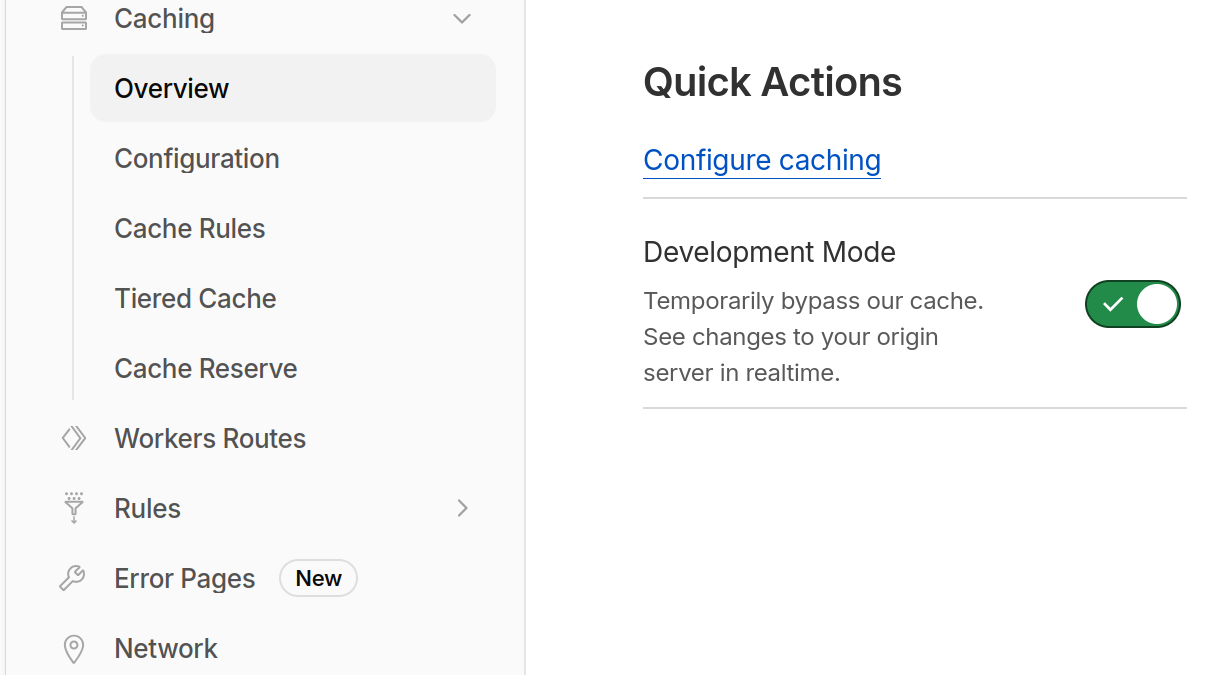
I tried to make to not cache at Caddy config, but it did not help: