Yes not a problem with nestjs. As you stated its built on express but with fastify also as an option. Its pretty well architectured with modularity as a feature. It has Graphql and prisma support as well. so generally not a tight lock in.
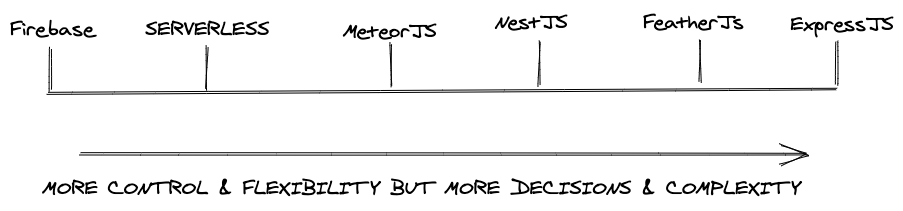
However its nowhere as easy/fast to work with as Meteor. Knowledge of Angular is NOT required but it clearly is designed along angular’s mindset and conventions. I still check up on Meteor because we really could do with speedier development time on some of our MVPs
Yes we build multiple apps so its not a matter for us of multiple databases per app. Most developers I know don’t want and don’t see the need to invest in mongo on a per project basis. They can’t think of any thing mongo can do that postgres can’t but see many areas where they think postgres is clearly more suited. So faced with just mongo in a framework as a first class citizen they say - no thanks
Heres the thing with that though. I don’t know of many enterprises and growing businesess that don’t want flexibility down the line. When you first build an app sure - speed of development is a big issue. With success not so much. with money coming in you can afford to build infrastructure that can adapt and grow with the technology. It seems to me that any company looking to make its money from hosting would need to be backing a stack that could inherently scale, grow and adapt. .
those aren’t sweet spots for Meteor as it is now and from what I read even the scaling that is possible in Meteor is more because of unofficial third parties.
I guess what also is puzzling me is I can’t get a sense of what Meteor wants itself to be - a build tool? A prototype tool? for mainline business? Theres been so many twists and turrns and reverses its hard to see the goal and thats affecting marketing because the only real selling point I hear is reactive out of the box which instantly reminds people - scaling issues out of the box.
Apollo as i understood it was to be an integral part of Meteor . That made sense because in my understanding it gave multiple databases and solved in built scaling issues tied to DDP (maybe I was wrong). For a hosting business model a stack you would stay on even after success was and is critical. Now I hear just as much about meteor being just a build tool as full stack.
I guess to put it short I don’t know after all these years what Meteor’s real identity is.
Agreed in regard to simplicity and development hours. I don’t think the argument can be made for community and ecosystem (unless you meant tight integration). the thing is - if I have to move off meteor once I my app is successful - what good does that do for galaxy? So shouldn’t I be going for what MDG was going for - another solution like apollo tight integrated and at core - ala vulcanjs?


 .
.