I hear your point and indeed the identity of Meteor changed a lot with the years, after all Meteor has been around and backward compatible since 2012 (not just 2017) an achievement in the JS land.
I think the new website capture what Meteor does pretty well, it says:
“Build Javascript Applications Faster with Meteor”
I think it a solid description, I’d say it’s the fastest and easiest way to get Javascript web and mobile apps without sacrificing too much control, it has just the right defaults to get you going.
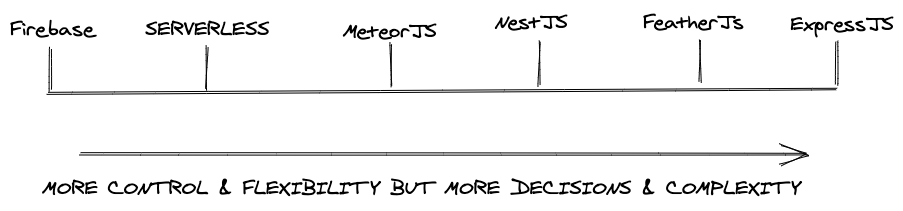
Meteor is opinionated enough to get you started quickly (as opposed to NestJS for example) and flexible enough to get you to production (you can see some of the example production app here), and then you’ve the Galaxy to eliminate the need for DevOps (although you can host it elsewhere since it is just a Node process). But I worked in large and small companies, I understand the resistance of developers in larger teams to use something highly opinionated, developers, like flexibility (and trendy tech), some might be more familiar with SQL and have a preference for it, so they won’t like a framework that forces them to use Mongo, NoSQL is relatively new and most developers are more familiar with SQL, and if your developer is more productive in SQL, then yes, I’d give them the tool they’re comfortable with. I see it as a spectrum, you’ve things like Firebase at one end where you’ve no control at all, Meteor somewhere in the middle, NestJS is more flexible, Feather is even more flexible and then you’ve Express.
But the fact is, Meteor is more productive than NestJS, it’ll save you man-hours (with accounts, real-time pub/sub, hosting, and sensible defaults) however you’ve to agree and stick with its initial choices (especially MongoDB), if you can’t and want the flexibility, then perhaps NestJS, Feather or just plain Express would be a better choice, I personally would go with just plain express, passport, webpack, if I want total flexibility, I don’t see much value in either Nest or Feather at this point, why coupling myself with another new JS framework (2017) with little to add and that could be abandoned (it seems to be maintained by only one developer)? I don’t see much value in NestJS relative to plain express/passport/webpack really, I personally would never use it, we’ve webpack/express and Meteor projects and we’ll explore Deno, I don’t see where NestJS would fit, it is the same reason why FeatherJS didn’t grow, they offer very little to plain express/webpack.
WIth regards to scaling, like I said, if you remove pub/sub then you are dealing with scaling Node sockets, no different than express. With pub/sub you need to scale horizontally quickly to minimize the hit on the CPU (or use something like RedisOplog), again it is solvable and can be optimized with scale. NestJS is not giving you any scaling advantage, in fact, it is offering your nothing for real-time pub/sub or hosting, therefore for me, NestJS is a also a no-go tech.


 .
.
 at this point, and the devs who discover it find a lot of joy in building & maintaining apps. Meteor will continue to grow organically, the best kind of growth, and passionate devs write the packages they need which benefits everyone in the eco-system. You can look at some of my post history if you’d like to see some of my comments to clear up old FUD.